
The U.S. Department of Transportation (DOT) recently announced the issuance of a final rule[1], effective May 26, 2026, requiring covered air carriers[2] to prepare and submit a one-page passenger rights summary (a “Passenger Rights Summary”) addressing key disruption-related topics. The final rule implements Section 429 of the FAA Reauthorization Act of 2018.
Continue Reading DOT Issues New Passenger Rights Disclosure RuleCaution for Global Carriers: Specific Personal Jurisdiction Expanded in Doe v. Lufthansa
The Ninth Circuit’s opinion in Doe v. Lufthansa expands district courts’ jurisdiction over foreign airlines. The plaintiffs, a married same-sex couple, booked round-trip flights from Saudi Arabia to San Francisco through Lufthansa, headquartered in Germany but regularly operating flights in and out of California. The plaintiffs allege that Lufthansa staff in Saudi Arabia singled out the couple’s marital status, demanded personal documents, and disclosed their relationship to Saudi authorities, creating grave risks in a country where same-sex relationships are criminalized. The couple brought claims for breach of contract, invasion of privacy, and emotional distress in California. The district court initially dismissed the suit for lack of personal jurisdiction, reasoning that the conduct alleged occurred abroad.
Continue Reading Caution for Global Carriers: Specific Personal Jurisdiction Expanded in Doe v. Lufthansa“Drone & Order” Series: Landmark Proposed Rule May Open U.S. Skies to Expanded Commercial Drone Deployments
On August 7, 2025, the Federal Aviation Administration (FAA) and the Transportation Security Administration (TSA) took a major step toward expanding the deployment of drones in U.S. airspace by jointly releasing a Notice of Proposed Rulemaking (NPRM) that would establish comprehensive, performance-based regulations for UAS operations beyond visual line of sight. To learn more, please
White House Issues Executive Order to Accelerate Commercial Space Activities
The White House has issued a highly anticipated Executive Order aimed at improving the competitiveness of the U.S. commercial space industry. The Order, titled “Enabling Competition in the Commercial Space Industry,” was issued on August 13, 2025 and directs multiple federal agencies to overhaul regulatory requirements in four key areas: (1) commercial launch and reentry licensing, (2) spaceport infrastructure, (3) novel space authorizations, and (4) leadership and accountability. A high-level overview of the EO’s provisions in each of these areas is below.
Commercial Launch and Reentry Licensing: The EO orders a thorough overhaul of the Federal Aviation Administration’s (FAA) launch and reentry regulations, contained in 14 CFR Part 450, instructing the FAA to “reevaluate, amend or rescind” Part 450 requirements, including determining if certain types of launch vehicle should be subject to less stringent licensing requirements.
Continue Reading White House Issues Executive Order to Accelerate Commercial Space ActivitiesDistrict Court Decertifies Class in Scanlan v. American Airlines
A U.S. District Court judge last week granted American Airlines’ motion to decertify several subclasses of pilots in a suit alleging the airline wrongly denied its pilots pay and profit-sharing credit for absences for short-term military leave because “[o]ne size does not fit all” when it came to the class claims. The decision is a dramatic pivot in the long-running Scanlan v. American Airlines case, which will now continue only on behalf of the two named plaintiffs rather than as a class action.
Continue Reading District Court Decertifies Class in Scanlan v. American AirlinesComing Soon: “Drone & Order” – A series on FAA rulemaking, BVLOS, and the future of UAS

The FAA recently released its long-anticipated proposed rule on Beyond Visual Line of Sight (BVLOS) drone operations—a major step toward enabling more advanced and scalable commercial drone use in the U.S. The rule proposes a new regulatory framework with defined operational categories, right-of-way rules, and requirements for remote pilot qualifications, equipping industry stakeholders with clearer
Supreme Court Asked to Resolve Circuit Split on Freight Broker Liability
A recent Supreme Court petition in Montgomery v. Caribe Transport II LLC et al. seeks to resolve a deepening circuit split over whether state-law negligence claims against freight brokers are preempted by the Federal Aviation Administration Authorization Act (FAAAA). While courts broadly agree that the FAAAA preempts state laws “relating to a price, route, or service of any motor carrier,” they diverge on whether the statute’s “safety exception” —which provides in relevant part that the FAAAA “shall not restrict the safety regulatory authority of a State with respect to motor vehicles”—permits claims for negligent hiring or selection against brokers.
Continue Reading Supreme Court Asked to Resolve Circuit Split on Freight Broker LiabilityDOT OIG Releases BVLOS Audit Report
On June 30, 2025, the Department of Transportation Office of the Inspector General (DOT OIG) released its audit report assessing the FAA’s efforts to advance beyond visual line of sight (BVLOS) drone operations outside the parameters of existing drone regulations. Among many findings, DOT OIG found that the FAA has approved increasingly complex BVLOS drone
Chambers Ranks Crowell’s Aviation Attorneys in 2025 Guide
We are proud to announce that Crowell has again been ranked in Band 2 of the “Transportation: Aviation: Transactional − Nationwide” category in the Chambers USA 2025 guide.
In addition, two of Crowell’s premier Aviation attorneys, Amna Arshad and Mary-Caitlin Ray, are ranked in the “Transportation: Aviation: Regulatory – Nationwide” category. Amna is recognized
Federal PFAS Reporting Delayed, but Aerospace and Car-Part Companies are not Off-the-Hook
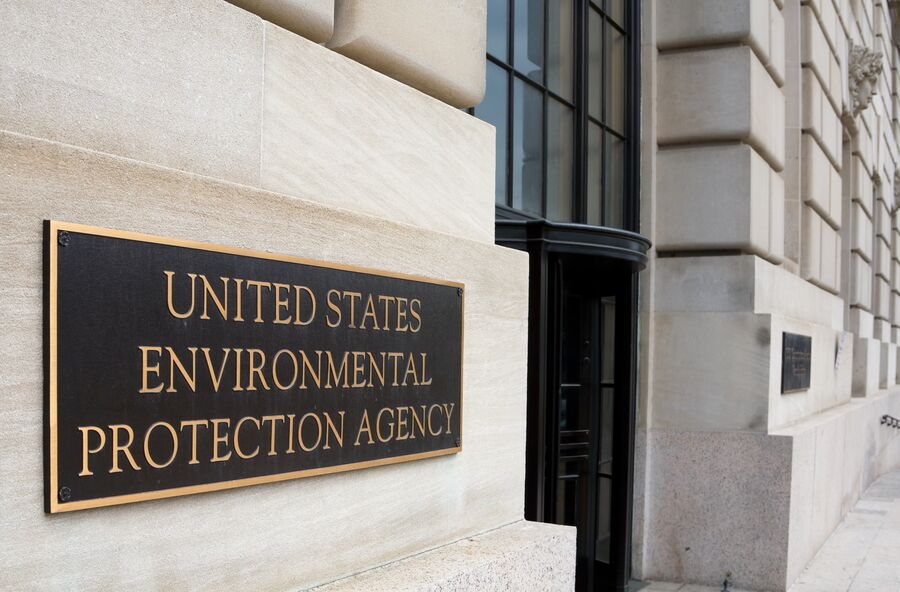
EPA recently published an interim final rule delaying by nine months the time for manufacturers and importers of products containing perfluoroalkyl or polyfluoroalkyl substances (PFAS) to report to EPA on their past activities. EPA’s PFAS reporting rule requires anyone who manufactured (including imported) any PFAS compound, or who imported any article containing a PFAS compound, at any time between 2011 and 2022, to submit detailed information regarding those past activities. The rule published on May 13, 2025, postpones the start of the reporting period from July 11, 2025, to April 13, 2026. Reporting must now be completed by October 13, 2026, for most manufacturers and by April 13, 2027, for small manufacturers reporting exclusively as article importers.
Continue Reading Federal PFAS Reporting Delayed, but Aerospace and Car-Part Companies are not Off-the-Hook